The Problem
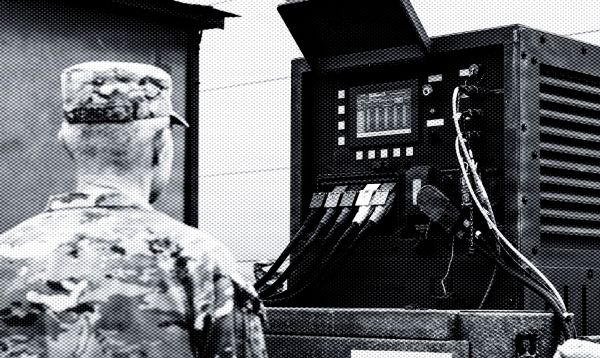
The Army's traditional power generation capabilities are not easily distributed among smaller units and may not meet the increasing power needs of additional battlefield capabilities, especially in the arctic environment.
Current generators' high acoustic and electromagnetic signatures create security risks, while their fixed configurations and limited connection ports/power outputs restrict dismounted Soldiers device-specific batteries instead of a shared power network. Soldiers also have to account for reduced battery performance in cold weather climates. As a result, commanders must consider power capabilities when planning operations and assessing unit duration.
Please note the recent changes to the SBIR Broad Agency Announcement (BAA) document to ensure your proposal doesn’t get disqualified.
The Opportunity
The Army is seeking modular plug-and-play systems that seamlessly integrate into a resilient energy network that can survive in austere environments and include:
- Large to small power production and storage capabilities
- Interoperable smart hubs, power conversion units, and power distributing capabilities
- Increased battery performance in extreme cold weather conditions
- Standard commercial/military connectors that support fast charging
- Support of standard military and commercial batteries
- Lightweight construction to reduce carry load on the Soldier
- Designed for ease of maintenance with readily available systems
- Scalable power inputs and outputs based on unit size
- Support low electromagnetic/acoustic signature
- Capability to power continuous operations
What Makes SPARTN Different?
SPARTN combines Army SBIR funding and AAL's business model to create a program that moves — and pays — at the speed of business. By blending government and industry best practices we introduce a whole-of-Army approach to innovation.
Learn more about the SPARTN Program.